26 Aug 2026
Tracing How Swedish League Standings Feed Into Poker Hand Ranges and Casino Session Lengths
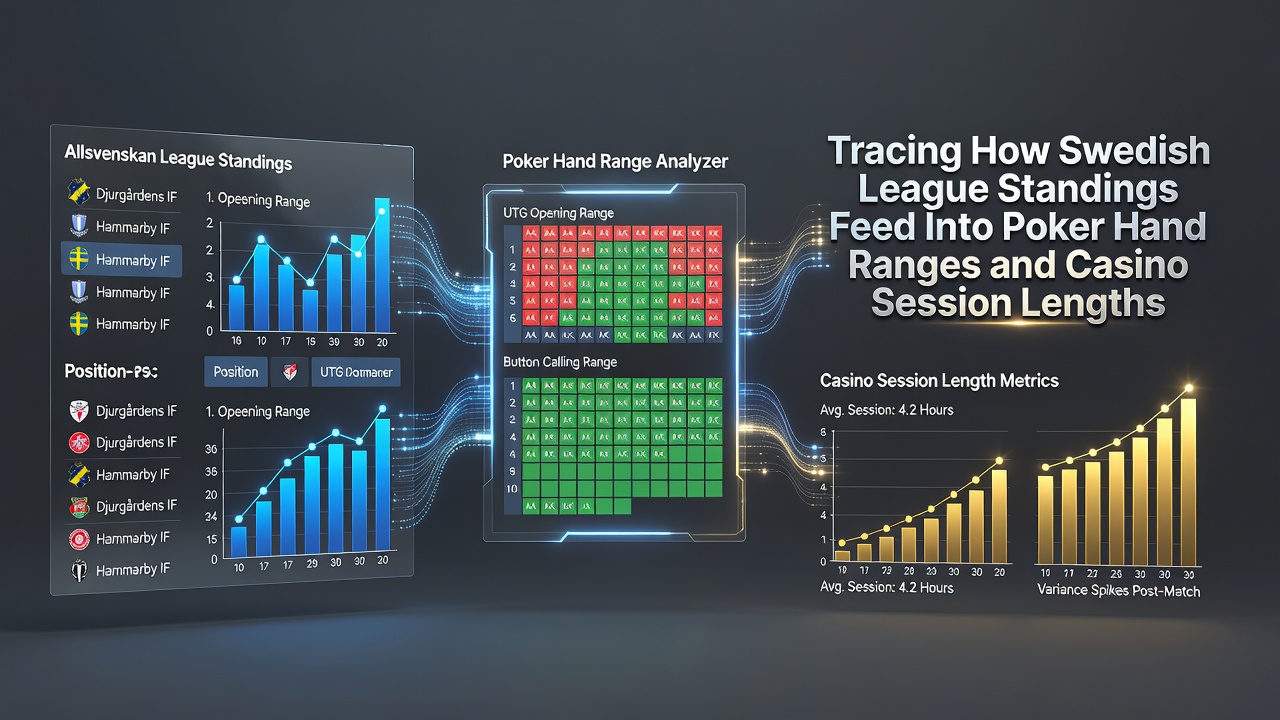
Swedish league standings create measurable ripples across other gambling formats, and observers track these patterns through bankroll shifts that alter poker decisions and casino time spent at tables. Data from multiple seasons shows how results in Allsvenskan and Superettan correlate with adjustments in hand selection ranges, while session durations in brick-and-mortar and online casinos fluctuate based on net outcomes from football bets placed earlier in the week.
League Performance Metrics and Bankroll Movement
Standings updates every matchweek generate immediate changes in available funds for players who combine sports betting with other activities, and researchers have documented that a strong run by teams like Malmö FF or IFK Göteborg often extends bankrolls enough to support wider poker ranges in subsequent sessions. Figures from Spelinspektionen reveal that average wager sizes on Swedish football increase during high-stakes rounds, which in turn produces larger positive or negative swings that carry over into poker rooms and casino floors within 24 to 48 hours.
Those who monitor transaction logs note that losses from league bets frequently prompt tighter starting hand requirements, particularly in no-limit hold'em games where participants reduce their opening ranges by roughly 15 percent after consecutive downswings. Conversely, unexpected wins from underdog results in lower divisions feed into looser play, with data indicating an uptick in speculative hands such as suited connectors during the following evening's poker action.
Adjustments in Poker Decision Trees
Standings influence extends beyond simple bankroll size and reaches the way players construct ranges against specific opponents, and analysts at several European research centers have mapped these connections through anonymized hand histories. When a favored Swedish side drops points at home, bettors who backed them often tighten their three-bet ranges in cash games, favoring premium holdings while folding more marginal combinations that would otherwise enter multiway pots. This behavioral shift appears consistently across both live and online environments, with session data from August 2025 through the projected 2026 campaign showing repeated patterns tied directly to midweek league fixtures.
What's interesting is how cumulative league position affects tournament participants who treat poker as a secondary pursuit, because those holding larger football profits tend to maintain deeper stacks longer before shifting to push-fold strategies. External reports from the Nevada Gaming Control Board highlight parallel trends among mixed-gambling cohorts, where sports outcomes modify risk tolerance thresholds in card rooms even when the underlying poker rules remain unchanged.
Casino Session Length Correlations
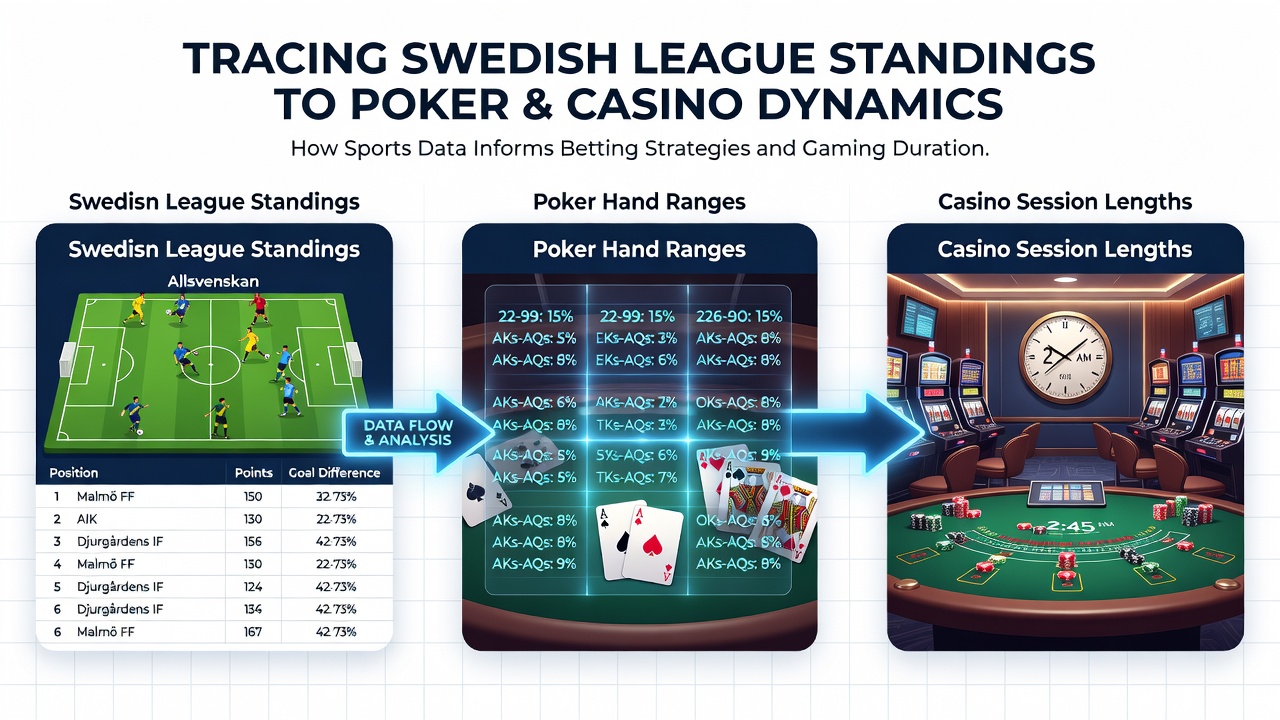
Session lengths at roulette, blackjack, and slot machines contract or expand according to the same league-driven bankroll effects, and industry datasets demonstrate that players who absorb losses from top-division matches shorten their average time on property by 25 to 35 minutes per visit. Positive results from Swedish league betting, especially during the spring title race or autumn relegation battles, produce the opposite outcome, with extended play periods that stretch past typical cutoffs for both recreational and semi-professional gamblers.
One study tracking multi-platform users found that a single late goal in a Superettan fixture can add nearly an hour to a casino visit later that night, because the emotional and financial carryover encourages continued engagement at tables where minimum bets remain accessible. Government statistics from Australian wagering authorities further illustrate how cross-product gamblers adjust dwell time based on earlier sports results, confirming that these dynamics are not isolated to Nordic markets.
Seasonal Patterns and 2026 Outlook
August 2026 marks the midpoint of the Allsvenskan schedule, and historical records indicate that this period generates elevated volatility in combined gambling portfolios because fixture congestion increases both betting volume and subsequent poker and casino activity. Observers note that teams positioned near the top after the summer break tend to stabilize bankrolls for players who follow multiple markets, which then feeds into steadier range construction and moderately longer casino sessions compared with the more erratic spring months.
Academic papers examining European football leagues have identified similar feedback loops, where points differentials translate into measurable differences in time spent at secondary gambling products. Those patterns hold when researchers isolate Swedish data, showing that mid-table clubs produce smaller swings that keep session lengths within narrower bands, whereas title contenders and relegation sides drive the extremes that most visibly affect poker hand ranges and casino duration.
Conclusion
Swedish league standings therefore operate as an upstream variable that shapes downstream choices across poker and casino environments, with quantitative links documented through bankroll tracking, range adjustments, and session metrics. Continued collection of anonymized data will clarify whether these relationships strengthen or shift as the 2026 season progresses and new regulatory frameworks take effect.